 Mirmi
Mirmi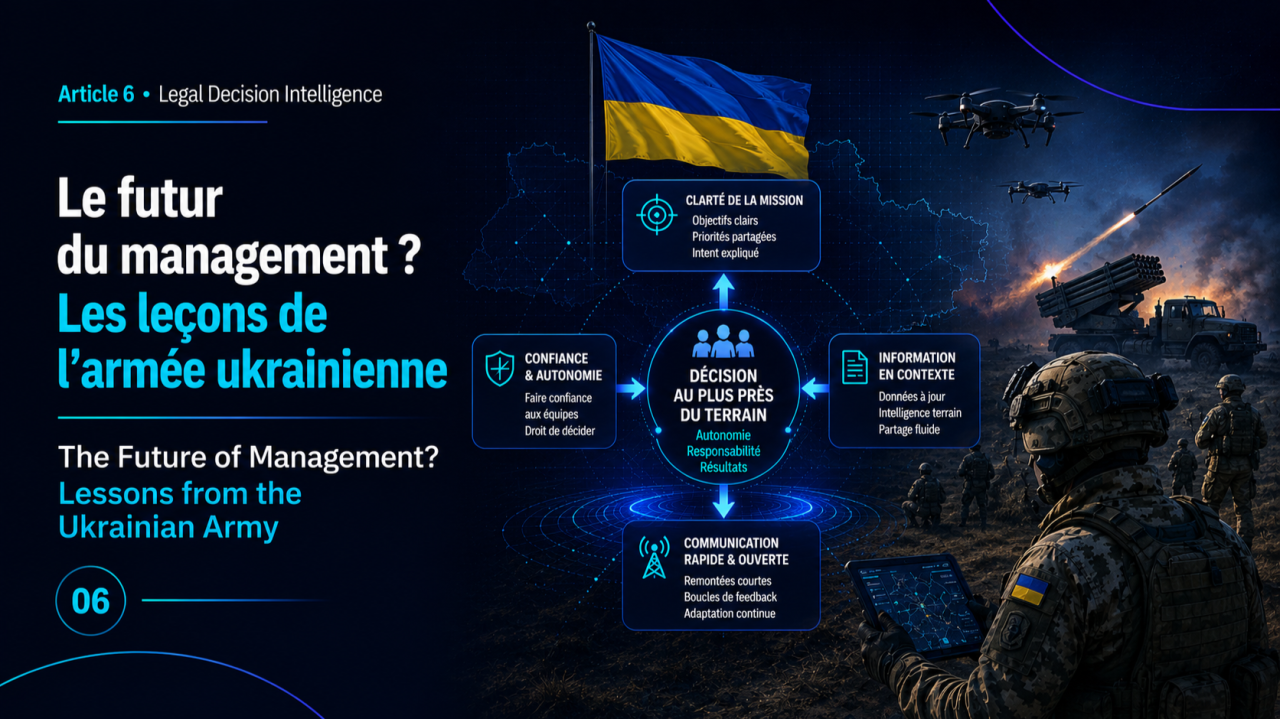
Ukraine’s ability to adapt is often explained by drones, technology or innovation.
But there is another factor that is less spectacular and probably just as important: the autonomy given to units on the ground.
The logic of Mission Command is simple: leadership sets the objective, the boundaries and the priorities, but does not decide every move. The people closest to reality are given enough room to act quickly.
By contrast, the Russian army remains far more centralised. Decisions travel further up the chain of command, which can slow adaptation despite strong tactical capabilities.
The difference is visible even in equipment. In Ukraine, combat units can now choose their drones directly from more than 800 products on a military marketplace, and some units even have workshops close to the front where hardware and software can be modified with manufacturers based on what actually works in the field. More than 400 units have already used this system and over 500,000 drones have been ordered through it. Each unit retains significant freedom to organise itself and choose how to achieve the objectives set by central command. (Ukrainian Ministry of Defence, CSIS)
The contrast with the Russian model becomes much easier to understand this way: according to RUSI, Russian sergeants have historically had far less delegated authority than their Western counterparts, to the point that the lowest professionally trained command level remains the lieutenant. The system is more centralised, hierarchical and bureaucratic. On one side, adaptive capacity is pushed down to the field; on the other, decisions are more likely to travel back up to the commander. Russia has adapted significantly at the tactical level since 2022, especially around drones, but its command structure remains structurally more centralised. (RUSI)
Many companies still operate the same way
A salesperson knows the customer, the deal, the balance of power and the urgency. Yet as soon as something falls outside the standard, the decision moves upward: manager, Legal, Procurement, Finance, DPO… sometimes through several committees.
Each approval can potentially reduce risk. But every additional layer also slows the decision down and moves it further away from the person who understands the context best.
The result is paradoxical: companies hire capable teams, then require approval for decisions those teams may encounter dozens of times a year.
Autonomy does not mean no control
That is exactly why the Ukrainian example is so interesting.
Giving more autonomy does not mean saying “do whatever you want.” It means setting clear objectives, red lines, accessible information and precise criteria for when escalation is required.
Autonomy without doctrine = chaos.
Doctrine without autonomy = bureaucracy.
McKinsey & Company found that employees who were genuinely empowered to make decisions and sufficiently supported by their managers were 3.2 times more likely to describe delegated decisions as both fast and high-quality.
The important word is supported. Not abandoned.
This is probably the future of internal approvals
Legal, Finance, Compliance, Procurement and Security have traditionally protected organisations by centralising approvals.
Tomorrow’s model may be different: their role could be less about making every decision themselves and more about giving teams the means to make all the decisions they can safely make on their own.
In practice:
“Here is what we are trying to protect. Here is what you are allowed to decide. Here is when you need to call us.”
Today’s tools make this logic far more realistic than before. Rules, precedents, past decisions and their context can now be made available exactly when an operational team needs to act.
Legal Decision Intelligence fits directly into this shift: not as another layer of control, but as a way to distribute decision-making capacity without losing consistency.
You can give your teams Copilot, ChatGPT and ten agents. If every decision still has to travel up three levels before it can be approved, you have simply automated the path to the bottleneck.
One of the broader lessons from Ukraine is therefore organisational:
in a fast-changing environment, the advantage belongs to the organisation that gives the right people the context, boundaries and trust they need to decide on the ground.
This publication is based on an analysis first shared by Mirmi on LinkedIn.
View on LinkedIn